Monday, September 27, 2010

PLANTING SEASON IS OVER


After 4 months of garden preparations and planting trees, the last tree was planted this month. A total of 30 hectares(or 75 acres) of 4,750 trees in various tree types, were planted. These included oil palm, coconut palm, malaysian trees, our top 100 fruit/nut/spice trees, breadfruit trees, neem trees, grafted trees, banana trees, forest fruit trees, cola nut trees, and others. Getting these trees into the ground in time to establish themselves before the dry season arrived involved a huge effort on the part of the work teams from the community. These trees will provide the base for testing out new varieties of useful trees for small farmers out in their village gardens.

Sunday, August 22, 2010

Roy and the guys - busy beavers!


Planting out trials of better varieties of manioc/cassava

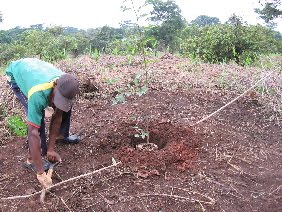
Tree planting, in rows in the orchards

Roy and his teams of temporary workers have cleared, plotted out, and planted 75 acres of trees and experimental crops. All this, so fast, in order to get things established before the rainy season gets too far along. Rainy season here is usually April through mid-November.

The farmer and the cowhand should be friends!?


Uh-oh, a neighbor's cattle have meandered into the newly cleared and planted CEFA land. Negotiations for the shepherd to keep better watch are in order!

Thursday, August 5, 2010

The Fastest to Die - By Patrick Vinck and Phuong Pham | Foreign Policy

Follow this link to read a new report out on the impact of the chronic insecurity and under-development in CAR. CEFA is earnestly working to help Central Africans in the South West overcome the challenges described in this article. Please read!

The Fastest to Die - By Patrick Vinck and Phuong Pham | Foreign Policy: "- Sent using Google Toolbar"

Friday, July 16, 2010

New strain of amaranth


While Angela was here in the spring, she brought us a new variety of amaranth, being used in East Africa as a protein supplement. The seeds are tiny, but pack a punch of protein. They can be ground up into meal and added to just about any prepared dish, or they can be popped, not unlike teeny tiny popcorn, and sprinkled over food. The leaves are also eaten, much like spinach. Here's the amaranth, in the foreground of the photo, growing wonderfully huge in the nutrition garden at the hospital. It looks like Hortense, Nadege, and two moms from the kids' nutrition center are happy with the garden.

Friday, July 9, 2010

Clearing land and planting palm trees

Roy continues to use large work crews to clear the land for orchards and crop trials. In this photo, a crew is harvesting the manioc from the land purchased from a farmer. Note: this farmer planted his manioc AFTER he knew that the land was being purchased, just so people don't get the idea that we are kicking farmers off their land.

After days of tedious plotting of tree placement, the trees are being planted.

Thursday, June 24, 2010

Why fruit trees?

Follow this link to an interesting article about how fruit trees are improving lives in a region in India.  Families plant a minimum of ten fruit trees every time a girl child is born. Find out why by clicking below:
http://news.bbc.co.uk/2/hi/world/south_asia/10204759.stm